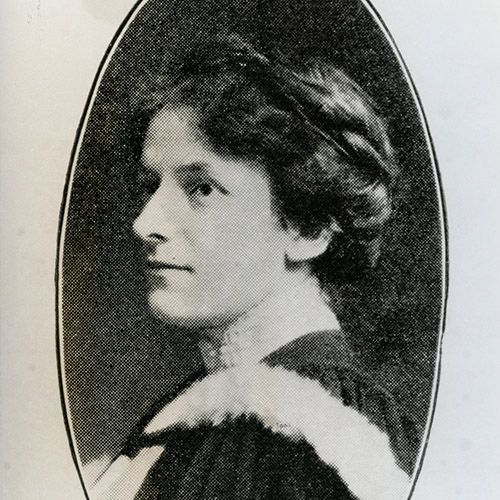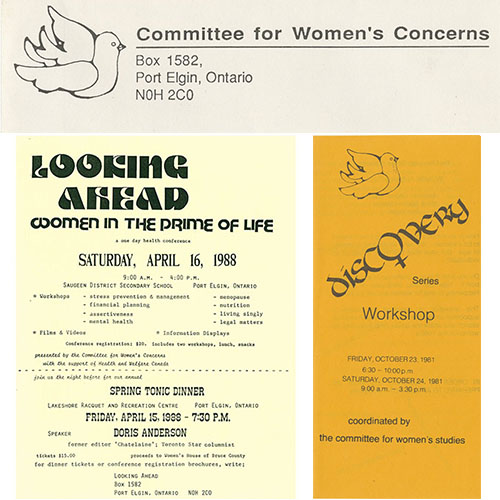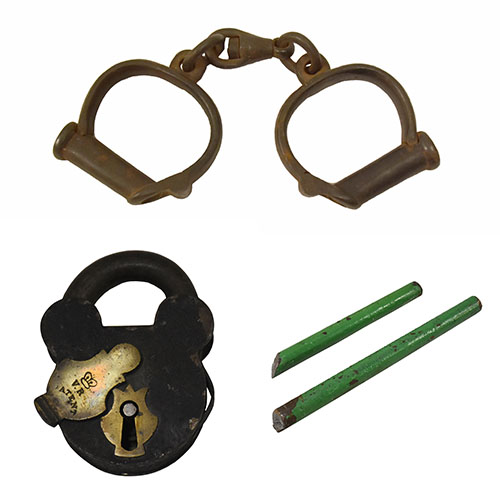


In 2022 the Bruce County Museum & Cultural Centre received a donation of materials about the life, education, and notable career of Jessie Macpherson. Born in Bruce County, Macpherson went on to complete her post-secondary education in Toronto and then embarked on a unique and lengthy career that spanned almost five decades, three provinces, and two countries.
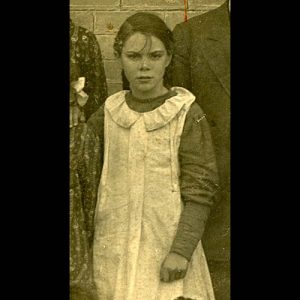
Jessie Macpherson was born on July 31, 1900 in Kincardine Township to John and Catherine (MacKinnon) Macpherson. She was raised on Lot 18, Concession 12, Kincardine Township and was the second youngest of six children. One of her siblings included Private Stuart McPherson (Macpherson) who served with the 160th Battalion, D Company and 1st Battalion during the First World War.
Jessie Macpherson first attended school at U.S.S. No. 3 Kincardine-Bruce (Eskdale) and later attended Kincardine High School. After secondary school she went to the University of Toronto where she graduated from the Department of Social Service with a certificate in Social Work on May 14, 1920.
Jessie Macpherson first worked as a social worker in Chicago, Illinois. While much of her time spent there is unknown, she received a diploma in stenography from the Gregg School on June 27, 1925. Macpherson stayed in Chicago for seven years and eventually returned to Ontario. On the newly released 1931 census Jessie Macpherson is listed as living in Tiverton with her Aunt Mary and Uncle Angus Macpherson with no recorded occupation. It was presumably sometime after the 1931 census that Jessie began working for the Children’s Aid Society in Perth, Ontario. According to her obituary, her tenure with Children’s Aid spanned a decade. In an article published about Macpherson in The Leader-Post (Regina), her early to mid-career accomplishments also included working in Hamilton and Toronto.
In February 1946, she started working at the newly opened Family Service Association branch in Moose Jaw, Saskatchewan as the inaugural Director. Macpherson was in this position for nearly two years before she accepted her longest and most prominent role as the Superintendent of the Gaol for Women in Portage La Prairie, Manitoba in early 1948.
The Gaol in Portage La Prairie opened in 1896 and initially served as a building to house men awaiting trial. After several other uses, the building eventually became a women’s prison in 1945. Macpherson became the Gaol’s first woman Superintendent. Royal Burritt, the Gaoler for the Eastern Judicial District of Manitoba, stated that the Superintendent, “[…] should be a woman of intelligence with a background in public service. A person possessing administrative ability, able and willing to assume all the responsibilities such an appointment involves.” It is clear why Jessie Macpherson successfully secured this position.
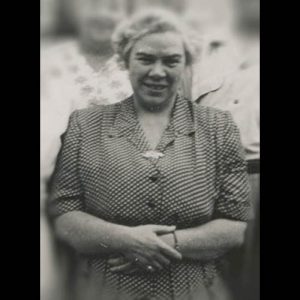
Throughout her career Macpherson was an advocate for her work at Women’s Gaol and her views about the penal system. She wrote several reports and articles, and spoke at several gatherings and conferences. Some of the groups she spoke in front of included Magistrate’s Conferences, Manitoba School, and the Catholic Women’s League.
On December 16, 1966, she received an interdepartmental memorandum from Ray Slough, the Director of Corrections a at the province of Manitoba that reads, “[…] I would like to take this opportunity to let you know that I always think of your work with a sense of gratitude. I trust that you will see your way clear to stay with us for several years to come. I say this knowing that it is going to be most difficult to find anyone who will bring the standard of effectiveness to the work that you have done.” Furthermore, on November 4, 1968, Jessie received a letter from a past incarcerated person, Rose, and her partner. The letter describes the changes they have made to their lives since being out of jail and even requested Jessie to be Godmother to their child and to walk Rose down the aisle at their upcoming wedding ceremony!
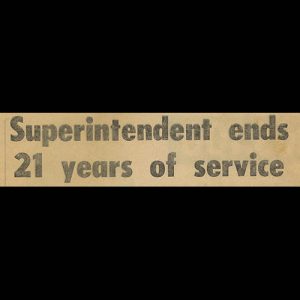
Macpherson relocated back to Kincardine after her retirement and lived at 998 Princes Street. She became a member of Knox Presbyterian Church in Kincardine and a member of the of the Bruce County Historical Society. She spent her retirement traveling, playing scrabble, reciting poetry, baking, spending time with family, and participating in church activities. She also continued to deliver speeches to local groups. Jessie Macpherson passed away at the University Hospital in London, Ontario on October 13, 1977, and is buried in Tiverton Cemetery beside her siblings Alexander, Neil and nephews Eoin and Angus.
Throughout her career Jessie Macpherson advocated for the conditions and support of an institution many will never experience. She made fundamental and long-lasting changes to the Gaol for Women in Portage La Prairie and presumably to those who were under her supervision. Throughout her career and beyond, it was clear she was passionate for the people, places, and systems she believed in.
Sources:
Jessie Macpherson fonds, Bruce County Museum & Cultural Centre
Singleton, Wendy A. Beyond the Attic Door : a Feminist Social History of Imprisonment at the Portage Gaol from 1945 to 1970. Thesis (M.A.)–University of Manitoba, Fall 2001., 2001.